

February 12, 2026Active Traction vs Passive Traction
“Disc Pressure Changes During Traction as a Function of Time and Force”
Biomechanics Research Lab, University of Chicago, Illinois
A Review of Anderson et, Al findings and conclusions
Confounding Evidence occurs when an unmeasured third factor distorts the true relationship between the cause and effect
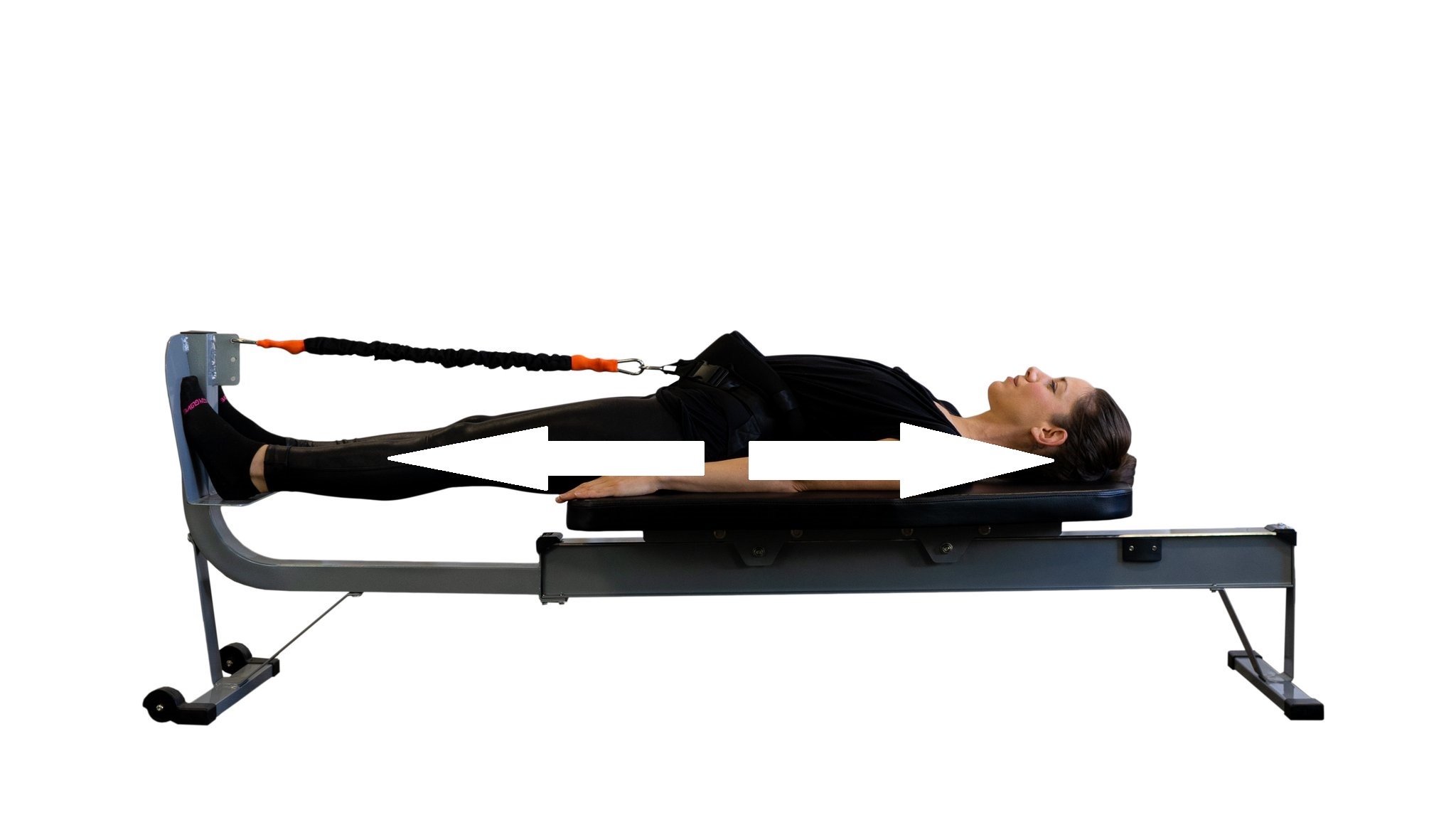
With active traction the patient uses their own muscle strength to create spine decompression or pull force. With passive traction, an external force (a machine, a therapist, weighted ropes) pulls the spine. In the Anderson study, traction force was applied by an external electric motor. This would be considered passive traction. However, since the subject was exerting muscle strain to grip and hold his arms above his head, technically alters the parameters to partially active and partially passive. Therefore, any conclusions by the author, or contrasts between fully “active” vs. fully “passive” would be inaccurate.
White Coat Syndrome. The test subject was scheduled to undergo a spine surgery procedure called a percutaneous discectomy. Just prior to this procedure the surgeon invited and received consent for the subject to participate in the traction study. This research procedure involved insertion of a specialized surgical spine cannula needle into the nucleus pulposus. Local anesthetic was used. However, these conditions would understandably introduce a myriad of anxiety-inducing factors, resulting in apprehension and guarding tension unrelated to traction therapy and, therefore, resulting in confounding evidence and inaccurate conclusions.
~Dr. Matthew J. Brown, D.C.
The volunteer was asked to reach above his head and grasp 2 handles throughout the duration of the study sequence as pressure data was collected. As caudal traction force was applied caudally at 50 N, the internal pressure increased. When the electric motor was switched off, the internal pressure within the nucleus pulposus dropped precipitously.
Because the test subject utilized his own strength to grasp the handle bars, he was activating muscles in his hands, arms, shoulders, and torso. We assume that indirect application of lumbopelvic muscles would follow. sEMG measurement of muscle activity was not utilized in this study. Therefore, we can not determine which muscle groups were being activated or what phase of traction corresponded to applied force. As 50 N caudal force was applied by the electric motor wench, this created a kind of natural “tug of war” between the subject and electric motor wench machine. This force accentuated inherent bracing and bearing down tension around the lumbar spine. As expected, this would result in increased internal disc pressure. This type of strain is similar to doing “dead hangs” on a chin-up bar. Also, this activity is similar to a test called Valsalva Maneuver where the patient strains and bears down, increasing intrathecal pressure and pressure in the nucleus pulposus. While muscle exertion was being employed by the subject, it was the electric motor applying (passive) traction force. This disqualifies the maneuver as a true form of “active” traction. Therefore, the conclusions by the author are based on confounding evidence. A true form of active traction would be accurately described only if an external source of force was not utilized, and only if the the traction force was 100% sourced from the subject.

This itinerary embodies our expertise, aligning each session with measurable outcomes that optimize engagement, facilitate collaboration, and sustain momentum for continuous improvement.
Day OneOrientation and Goal Setting
We establish shared objectives, outline solutions, and set performance metrics that frame the comprehensive experience ahead.
Check-In9:00 – 9:30am
Group Activity11:00am
Lunch Break12:30pm
Creative Workshop2:00pm
Dinner6:30pm
Day TwoCore Skills Workshop
We implement interactive modules that demonstrate essential techniques, optimize retention, and embed practical competences through guided practice.
Check-In9:00 – 9:30am
Group Activity11:00am
Lunch Break12:30pm
Creative Workshop2:00pm
Dinner6:30pm
Day TwoCore Skills Workshop
Industry leaders present emerging trends, facilitating critical discourse on future challenges and collaborative opportunities.
Check-In9:00 – 9:30am
Group Activity11:00am
Lunch Break12:30pm
Creative Workshop2:00pm
Dinner6:30pm
Our methodology unites scientific instructional design with operational precision, delivering measurable return on participation.-
Pre-event diagnostics determine baseline competencies, aligning content with identified gaps.
-
Module sequencing flexes to varying time horizons and sector requirements.
-
Internal audits examine pedagogical coherence and logistical efficiency.
-
Single-sign-on access streamlines user experience across devices.
-
Multimodal content accommodates visual, auditory, and kinesthetic preferences.